
Why It matters
Everyone has the right to decide whether and when to have children, with access to the information, means and services that make those choices possible. Reproductive rights matter in their own right. People’s choices take place within wider systems, including unequal access to services, economic insecurity and unequal consumption.
Rights, justice and a healthy planet
Reproductive rights and bodily autonomy matter in their own right. No population target can justify limiting anyone’s choices.
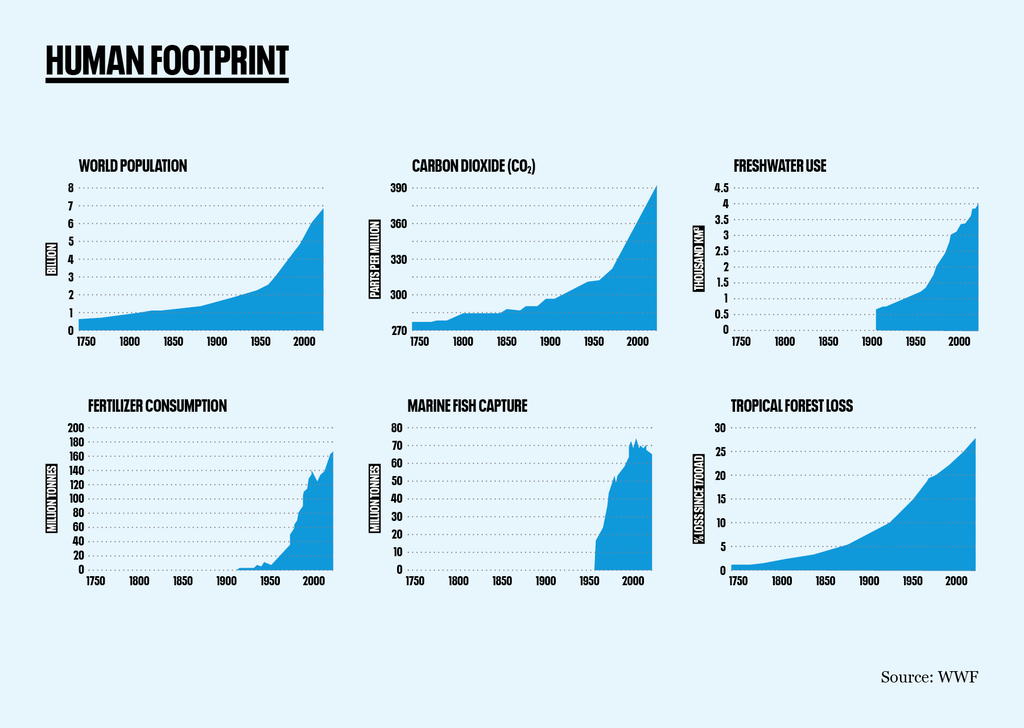
UN DESA’s 2024 projection estimates 8.2 billion people in 2024 and projects a peak of around 10.3 billion in the mid-2080s, followed by a gradual decline. Projections help describe possible futures; they are not population targets.
Understanding population change
Resource use is shaped by how goods and services are produced and consumed. UNEP identifies the built environment and mobility as leading drivers of material demand, followed by food and energy. Its report also documents large differences in material use and climate impacts between high-income and low-income countries.
Environmental challenges call for action on the systems that shape emissions, land use and resource demand. They do not justify population targets or restrictions on reproductive rights.
UNEP reports that high-income countries use six times more materials per person and cause ten times more climate impacts per person than low-income countries. These differences point to the importance of consumption and inequality in environmental discussions.
Everyone has the right to a good quality of life. A fair future requires respecting reproductive rights and addressing how resources are produced, consumed and shared. Population trends may inform planning; they are never a target or a substitute for tackling inequality and unsustainable consumption.
Together, we can do something about it
Reproductive rights, bodily autonomy, quality education and voluntary family planning are ends in themselves. People must be free to decide whether and when to have children and to access the services they choose. No preferred population size or environmental outcome justifies restricting those rights. Building a fair future also requires action on unequal consumption and the systems that shape how resources are produced and shared.
Population Matters uses campaigning, education and research to advance reproductive rights and a fairer relationship with our planet.