Population and the Sustainable Development Goals
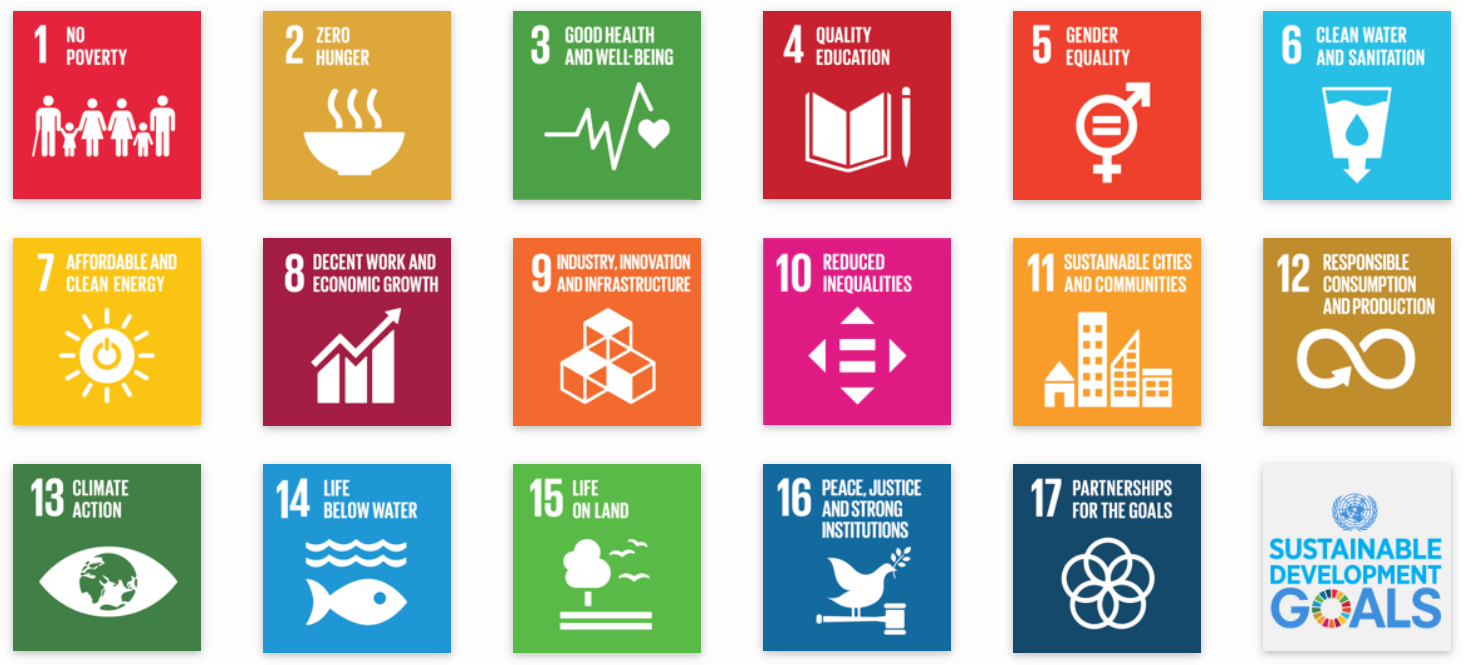
Reproductive rights and bodily autonomy are central to a fair future. The Sustainable Development Goals (SDGs) set shared ambitions for health, education, equality and a healthy planet. Public policy and fair access to services shape progress. Population data can support planning; it must never be used to blame communities or prescribe family choices. Explore how rights, public policy and fair access connect to the goals.
GOAL 1: NO POVERTY
Ending poverty requires action on unequal access to income, services and opportunity. Everyone should be able to access reproductive healthcare and voluntary family planning, and make their own decisions without pressure. Those rights are essential in themselves; family choices should never be treated as a cause of poverty or a target for development policy.
The UN’s 2026 SDG Report estimates that about 826 million people (10% of the world’s population) lived in extreme poverty in 2026, defined as living on less than US$3.00 a day in 2021 purchasing power parity.
Take Action
Contact your government to call for stronger commitment to the SDGs. Put reproductive rights, equitable access to services and action on inequality at the heart of that work.
GOAL 2: ZERO HUNGER
Everyone has a right to food security. Achieving it while protecting nature requires choices about food production, access and distribution; population trends may inform planning, but no one’s family choices are a policy target. The World Resources Institute’s 2019 baseline analysis estimated a 56% crop-calorie “food gap” between production in 2010 and projected demand in 2050; this was a historical scenario, not a current forecast. IPBES identifies land-use change, driven primarily by agriculture, forestry and urbanisation, as the direct driver with the largest relative impact on terrestrial and freshwater ecosystems. UN DESA’s 2024 projections put global population at around 10.3 billion in the mid-2080s, before easing to about 10.2 billion by 2100. The UN estimates that 645 million people (7.8% of the global population) experienced chronic undernourishment in 2025, down from 8.6% in 2022. The UN report warns that the 2026 conflict in the Middle East, extreme weather and cuts to official development assistance and humanitarian funding threaten progress towards zero hunger.
GOAL 3: GOOD HEALTH AND WELL-BEING
Reproductive rights and bodily autonomy matter in their own right. Everyone should be able to access quality healthcare that responds to community needs. Access to quality reproductive healthcare, including modern contraception and medically safe abortion, is essential to health, autonomy and the ability to make informed decisions. Between 2015 and 2019, UNFPA estimated that 121 million pregnancies each year were unintended—nearly half of all pregnancies. In 2023, over 700 women died every day from preventable causes related to pregnancy and childbirth. In 2021, about 164 million women of reproductive age worldwide had an unmet need for contraception. WHO’s 2025 urban health fact sheet notes that infectious diseases such as COVID-19, tuberculosis, dengue and diarrhoea thrive in poor and overcrowded environments and are closely related to unhealthy housing, poor sanitation and waste management. It also describes stark health inequities within urban areas. Quality reproductive healthcare and voluntary family planning must be accessible because they support people’s health, autonomy and right to make their own decisions. They are not tools for slowing population growth.
GOAL 4: QUALITY EDUCATION
Quality education is a right and a source of opportunity. It must not be used to pressure people about family choices or to target population growth. In 2023, UNICEF estimates that 122 million girls were out of school worldwide. In sub-Saharan Africa, more girls than boys were out of school at every level, and the out-of-school population was growing. Girls’ rights to education and bodily autonomy matter in their own right. Women and girls should have equitable opportunities to continue their education and make their own choices about whether and when to have children. Education and reproductive healthcare are essential to people’s rights and opportunities.
GOAL 5: GENDER EQUALITY
Women’s rights and bodily autonomy matter in their own right. Everyone deserves freedom from gender-based violence and discrimination, and access to healthcare, education and the ability to make choices about their own lives. These rights must not be treated as tools to solve environmental problems or change demographic outcomes. Gender equality is essential to reproductive autonomy: women must be able to decide whether and when to have children. The UN’s 2026 SDG report estimates that nearly one in three women globally – about 840 million – has experienced physical and/or sexual violence by an intimate partner or non-partner at least once in her lifetime, based on 2023 data. UNFPA and Johns Hopkins University estimated in 2019 that achieving three results in priority countries—ending preventable maternal deaths, gender-based violence and harmful practices, and meeting family-planning needs—would cost $264 billion over the decade to 2030. The study projected $42 billion in development assistance, with a further $222 billion needed through foreign investment, domestic allocation or private spending.
In 2026 alone, an estimated 4.5 million girls – many under the age of five – are at risk of undergoing female genital mutilation (FGM). Source: Joint UN statement, 5 February 2026.
UNFPA, UNICEF, OHCHR, UN Women, WHO and UNESCO, 2026
GOAL 6: CLEAN WATER AND SANITATION
Everyone has a right to safe and clean drinking water and sanitation; the UN General Assembly recognises this as a human right essential for the full enjoyment of life and all human rights. Water security also depends on effective infrastructure, pollution control and climate resilience. In 2022, 2.2 billion people lacked safely managed drinking water and 3.5 billion lacked safely managed sanitation. The Environment Agency’s 2025 National Framework for Water Resources, updated in 2026, models a public water supply deficit of up to 5,000 megalitres a day by 2055 under its ‘Do Nothing’ scenario. The Framework applies to England and Wales; regional forecasts cover England. Population trends may inform water planning alongside these factors; family choices are not a policy target.
GOAL 7: AFFORDABLE AND CLEAN ENERGY
Reproductive rights and bodily autonomy matter in their own right, alongside everyone’s right to affordable, reliable, sustainable and modern energy. In 2024, an estimated 2 billion people still relied on polluting fuels for cooking, according to the UN Sustainable Development Goal 7 report. High-income countries must lead the energy transition and support equitable access in lower-income countries. The US Energy Information Administration’s 2021 Reference case projected global energy use would rise nearly 50% between 2020 and 2050, mostly because of economic growth and population in non-OECD countries, particularly in Asia. This is a dated scenario, not a current forecast. Energy access and climate action must be pursued through fair investment and policy; family choices are not a target.
Expanding access to clean cooking requires equitable investment and infrastructure that serve communities’ needs.
GOAL 8: DECENT WORK AND ECONOMIC GROWTH
Young people have a right to education and decent work and must not be framed as threats to prosperity or stability. Economic policy should widen opportunity and address unequal access to income, services and social protection.
Economic policy should promote decent work, reduce inequality and support wellbeing while protecting the environment. Reproductive rights and bodily autonomy are ends in themselves; population change is never a policy target.
GOAL 9: INDUSTRY, INNOVATION AND INFRASTRUCTURE
Everyone should be able to access modern infrastructure and technology. Infrastructure decisions should respect human rights, meet community needs and protect biodiversity. Conversion of land to human infrastructure is a key driver of biodiversity loss, and buildings and construction account for 39% of global energy-related CO₂ emissions in 2017 (including upstream power generation).Road development across Asia poses a documented risk to tigers. A 2020 Science Advances study estimated that existing roads may reduce tiger and prey abundance by more than 20% and projected nearly 24,000 km of new roads in tiger conservation landscapes by 2050. The IUCN Red List’s 2022 assessment estimated 3,726–5,578 wild tigers, excluding cubs; it cautioned that the underlying national data span different years and methods. The Woodland Trust reports that Phase 1 of HS2 will cause direct loss or harmful indirect effects to 55 ancient woods.
GOAL 10: REDUCED INEQUALITIES
Reproductive rights and bodily autonomy matter in their own right. Everyone should have fair access to services and opportunity. A fairer global system should address inequality within and between countries, including unequal access to resources.
GOAL 11: SUSTAINABLE CITIES AND COMMUNITIES
Human rights, including rights to housing, healthcare, education and water, should guide city planning. Under the national definitions used by UN DESA, an estimated 57.8% of the global population lived in urban areas in 2025; UN DESA projects 67.3% by 2050. Access to housing, water, sanitation, transport, healthcare, education and decent work should keep pace with urban needs. The UN’s 2026 SDG 11 report says urban services are improving but not keeping pace with demand; gains in public-transport access have been modest relative to rapid urbanisation and growing demand. IPBES reports that urban areas have more than doubled since 1992. The UN’s 2026 SDG 11 report says that between 2020 and 2025, the share of urban land allocated to streets and open spaces rose from 16.6% to 17% across 414 cities in 126 countries, far below the recommended 30–45%. Fields in Trust’s Green Space Index projects that provision of public green space per person across Great Britain will fall by 7.6% by 2040.
In 2024, 1.16 billion people (24.8% of urban residents worldwide) lived in slums or informal settlements.
GOAL 12: RESPONSIBLE CONSUMPTION AND PRODUCTION
Reproductive rights and bodily autonomy matter in their own right. Responsible consumption and production should address high and unequal resource use through fairer systems, investment and policy; environmental goals are not a reason to set targets for family choices. UN DESA’s 2026 SDG Report finds global domestic material consumption rose 25 per cent from 2015 to 2022. It reports that the half of the world’s population living in higher-income countries consumed 80 per cent of global materials.
GOAL 13: CLIMATE ACTION
Reproductive rights and bodily autonomy matter in their own right. Climate action and responsibility must reflect the unequal drivers of emissions. The IPCC reports that the highest-emitting 10% of households contribute 34–45% of consumption-based household greenhouse gas emissions, while the bottom 50% contribute 13–15%. Access to healthcare, education and voluntary family planning must never be presented as emissions-reduction tools. Population dynamics can influence future demand alongside consumption patterns, energy systems, technology and policy; they do not erase unequal responsibility for emissions.
Sign up for our mailing list now to get the latest population and consumption news in your inbox every month.
GOAL 14: LIFE BELOW WATER
Reproductive rights and bodily autonomy matter in their own right. IPBES identifies human population dynamics among several indirect drivers of biodiversity change, alongside consumption patterns, economic and technological drivers, and institutions and governance; these drivers operate in different combinations and contexts. The 2019 IPBES Global Assessment reported that 66 per cent of ocean area was experiencing increasing cumulative impacts in 2014. IUCN’s 2024 assessment found 37% of shark, ray and chimaera species threatened with extinction; its November 2024 reassessment found 44% of warm-water reef-building coral species at risk of extinction. Marine conservation should protect the rights and livelihoods of people who depend on the sea. Voluntary family planning and education should be supported for their value to people and their rights, not as tools for meeting population or environmental targets.
GOAL 15: LIFE ON LAND
Reproductive rights and bodily autonomy matter in their own right; conservation policies should never prescribe family choices. IPBES identifies demographic and sociocultural change, consumption patterns, economic and technological drivers, and institutions and governance as interacting indirect drivers of changes in nature. It finds that land- and sea-use change and direct exploitation account for more than half of the measured global impact in terrestrial, freshwater and marine environments, while the dominant direct driver varies by context. The 2024 Living Planet Index reports an average 73 per cent decline in the relative abundance of monitored vertebrate populations between 1970 and 2020, based on 34,836 population trends across 5,495 species. The index tracks an average trend: many populations are stable or increasing, and the figure does not mean that 73 per cent of individual animals or species have been lost. Conservation should address direct pressures and wider societal drivers while respecting human rights.
GOAL 16: PEACE, JUSTICE AND STRONG INSTITUTIONS
Reproductive rights, bodily autonomy and participation in public life matter in their own right. Acemoglu, Fergusson and Johnson’s study examines population and conflict from 1940 to 1980. It found that population increases raised the likelihood of conflict in the settings studied, particularly conflicts over natural resources and during economic hardship; it does not establish that population growth always causes conflict. Strong institutions and economic opportunity matter for peace. Voluntary family planning should be available so people can exercise their rights, never as a conflict-prevention tool. Women should be able to participate fully in civil society and peacebuilding.
GOAL 17: PARTNERSHIPS FOR THE GOALS
Reproductive rights and bodily autonomy matter in their own right. The UN’s 2030 Agenda calls for global partnership and cross-sector cooperation to deliver its Sustainable Development Goals. Partnerships should support equitable public services, education, health and climate action. Voluntary family planning should be accessible because it supports people’s health, autonomy and decisions, never as a means of meeting population-size goals.